

Lighting ideas can refresh your home by improving visibility, highlighting architectural details, and making rooms feel warmer and more inviting. From statement pendant lights and recessed fixtures to under-cabinet LEDs and dimmer switches, the right choices can change how a space looks and functions without requiring a complete renovation.
Upgrade Your Home With These 10 Lighting Ideas
The right lighting combines style with everyday function. These 10 ideas cover different ways to brighten your home, highlight key features, and create a comfortable atmosphere in each space.
Install Statement Pendant Lights
Pendant lights provide focused illumination while adding visual interest. Suspended from the ceiling, they work especially well above kitchen islands, dining tables, and entryways.
Choose a fixture that suits the room's scale and existing finishes. A large pendant can anchor an open kitchen, while a group of smaller fixtures can create a balanced look over an island. Consider the height of the ceiling and the clearance needed for everyday activities.
For a cohesive interior lighting design, coordinate pendant finishes with cabinet hardware, faucets, or other metal details without making every element identical.
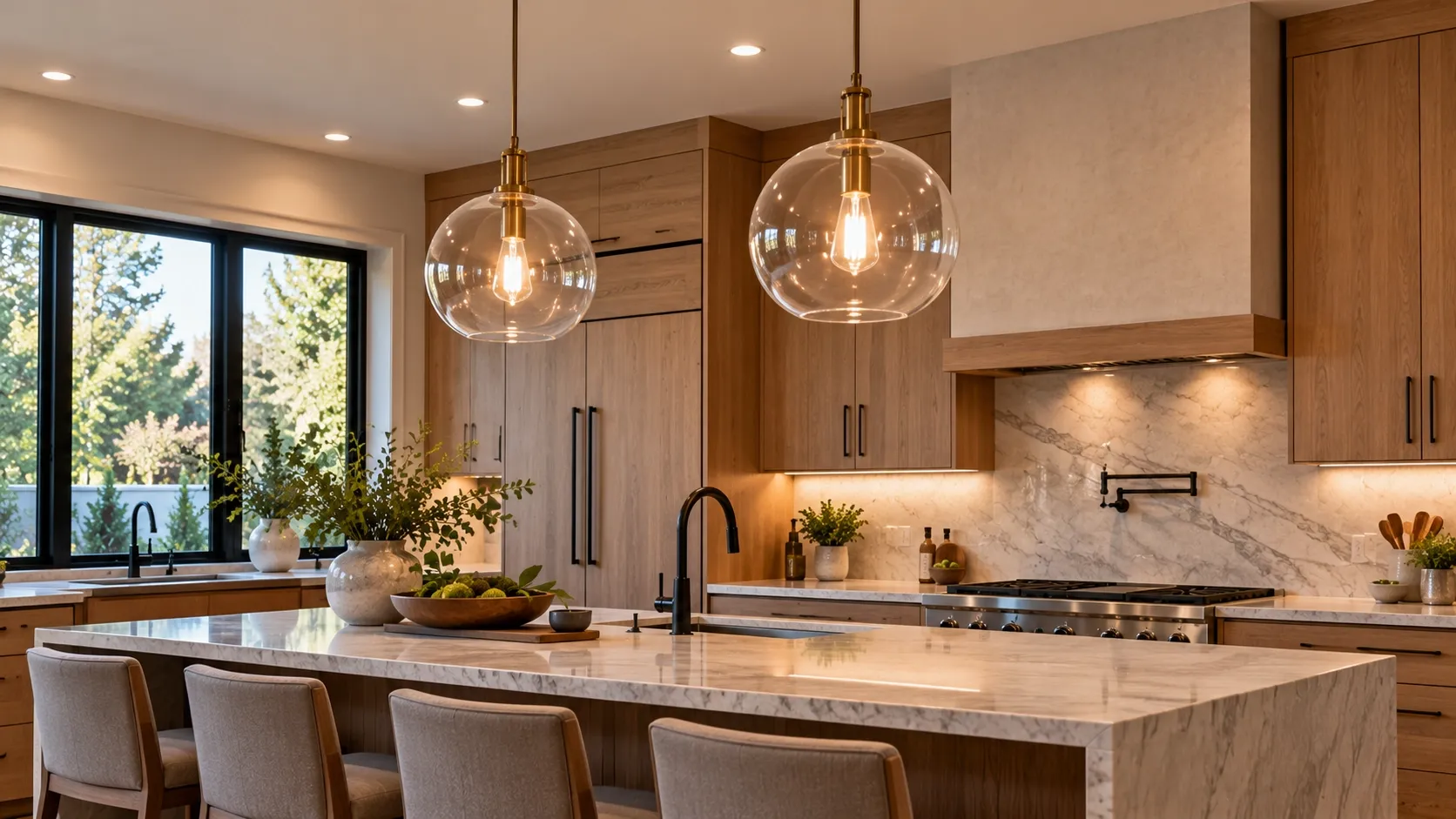
Add a Chandelier to Create a Focal Point
A chandelier can make a dining room, foyer, or bedroom feel more distinctive. Modern designs range from simple geometric forms to sculptural fixtures that serve as decorative centerpieces.
Size matters. A fixture that is too small may feel lost in a large room, while an oversized chandelier can overwhelm the furniture and surrounding architecture. Check ceiling height, room dimensions, and the position of nearby doors before selecting one.
Use warm-toned bulbs where a comfortable atmosphere is the goal. In dining areas, a dimmer can also help adjust the light for everyday meals and evening gatherings.
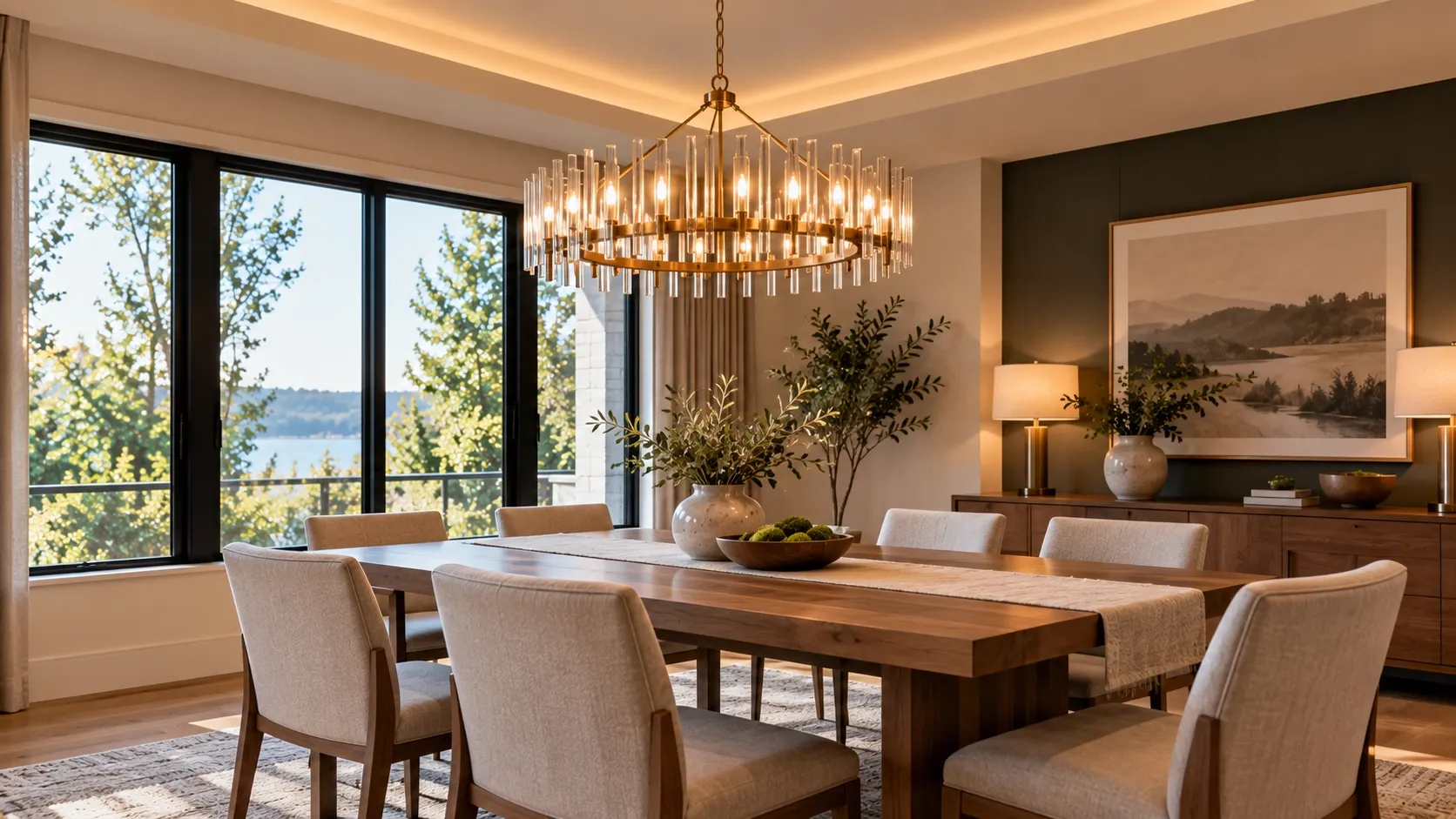
Use Recessed Lighting for a Clean, Modern Look
Recessed lights sit within the ceiling, creating a streamlined appearance without hanging fixtures. They are useful in kitchens, hallways, bathrooms, and living spaces where even illumination is needed.
Placement is more important than simply adding more fixtures. Lights positioned too close together can create unnecessary brightness, while poorly placed ceiling lights may cast shadows on countertops or work surfaces.
Plan recessed lighting around furniture, cabinetry, and room activities. In a kitchen, combine ceiling fixtures with task lighting instead of expecting overhead lights to illuminate every work area effectively.
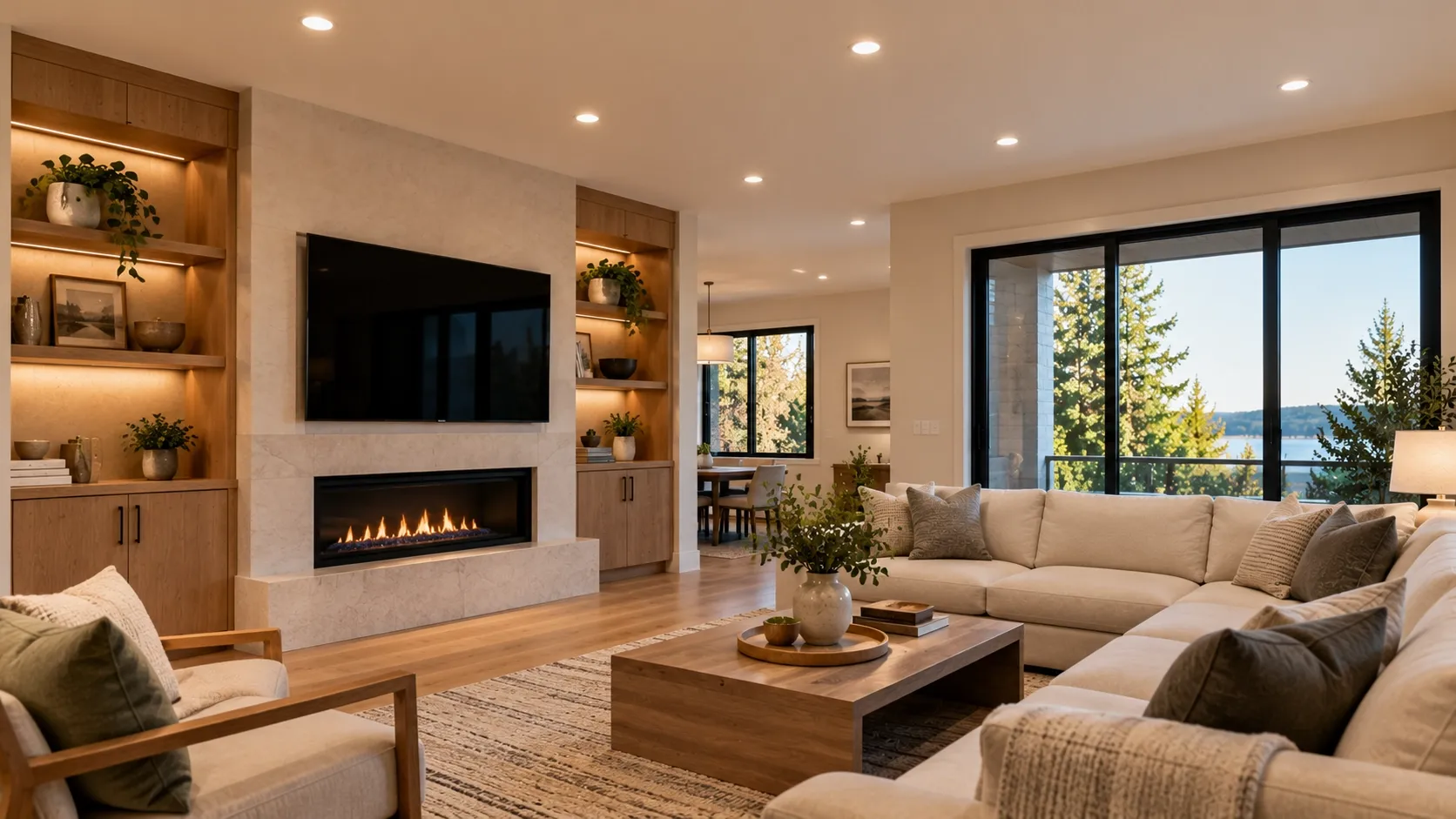
Highlight Walls With Sconces
Wall sconces add light at eye level and can create depth by illuminating walls, artwork, or architectural features. They are useful in hallways, bedrooms, living rooms, and entryways.
For example, a pair of sconces beside a mirror or artwork can create a balanced arrangement. In a bedroom, sconces beside the bed can free up space on nightstands and provide convenient reading light.
Consider the direction of the light. Upward-facing fixtures can soften the appearance of a room, while downward-facing designs can highlight a specific area. Choose a position that reduces glare and works with the height of the people using the space.
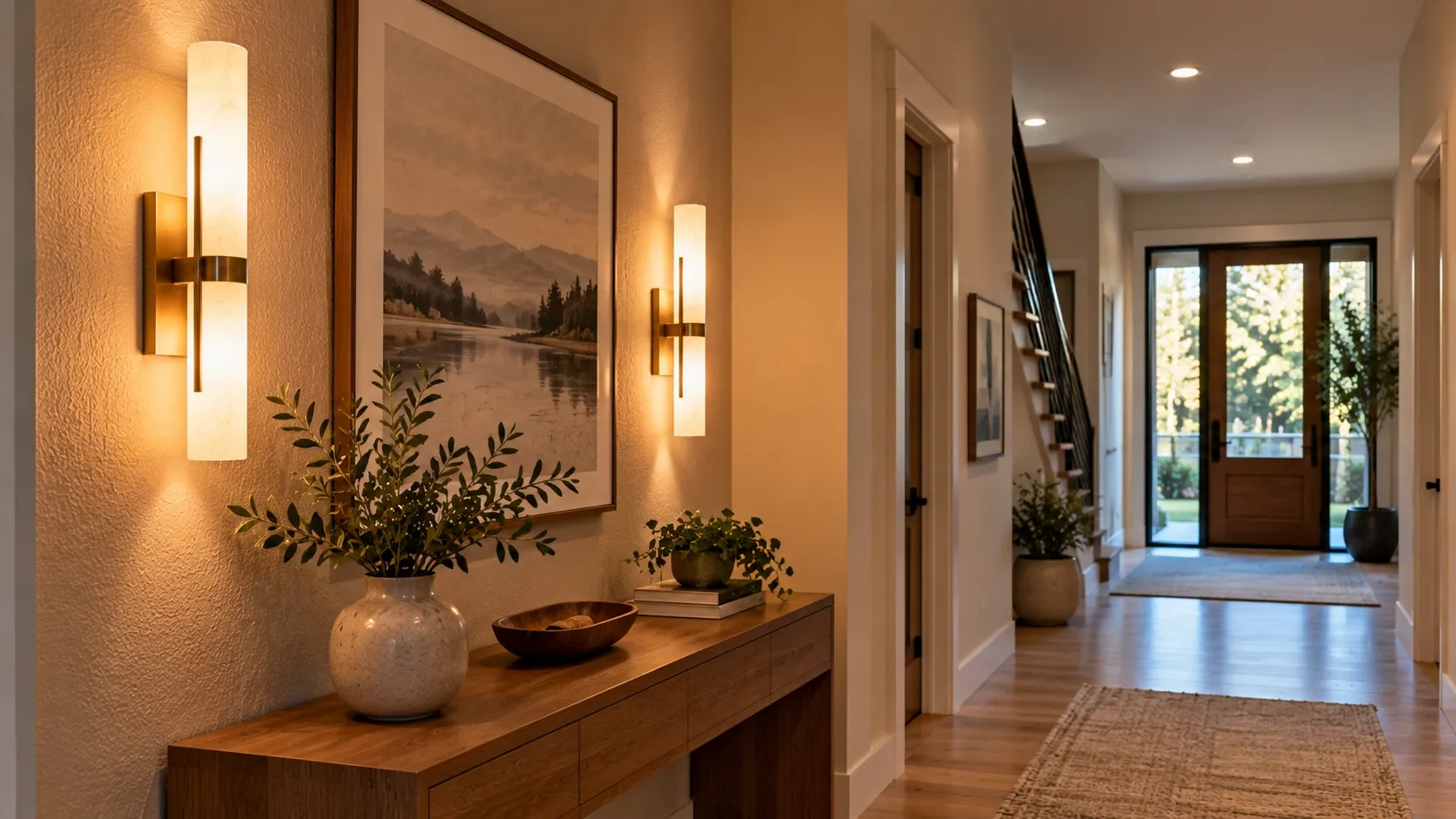
Add Under-Cabinet Lighting in the Kitchen
Under-cabinet lighting improves visibility on kitchen countertops by illuminating work areas that overhead fixtures may leave in shadow. It is particularly useful for food preparation, reading measurements, and cleaning.
LED strips and compact linear fixtures are common options. Strips provide a continuous line of light, while individual fixtures can suit specific cabinet layouts. Choose a color temperature that complements the kitchen's finishes and the lighting elsewhere in the room.
During a kitchen remodel, plan the fixture locations, wiring, switches, and power supply before cabinets are installed. This helps keep the final result neat and reduces the need for visible cords or later electrical changes.
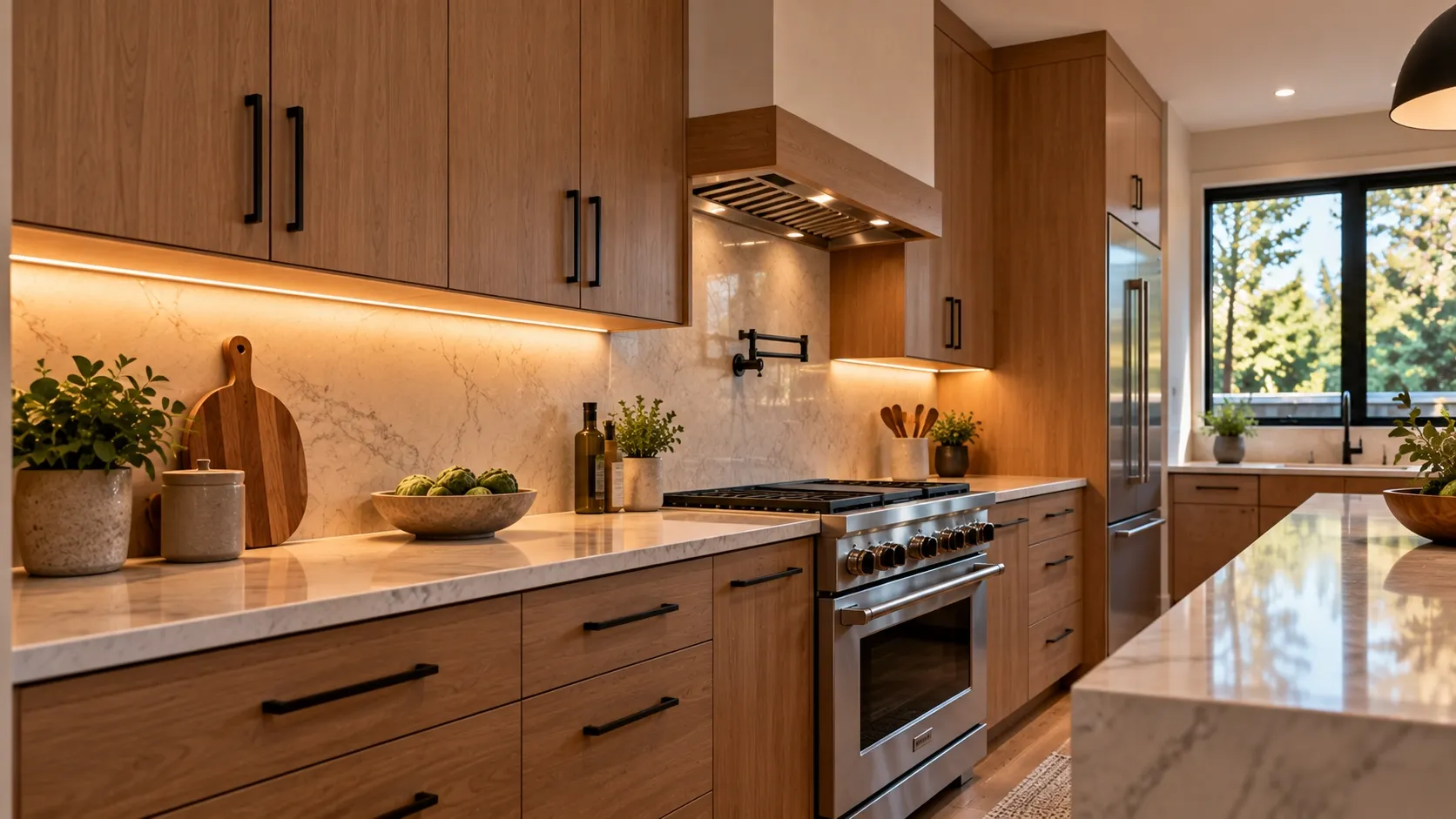
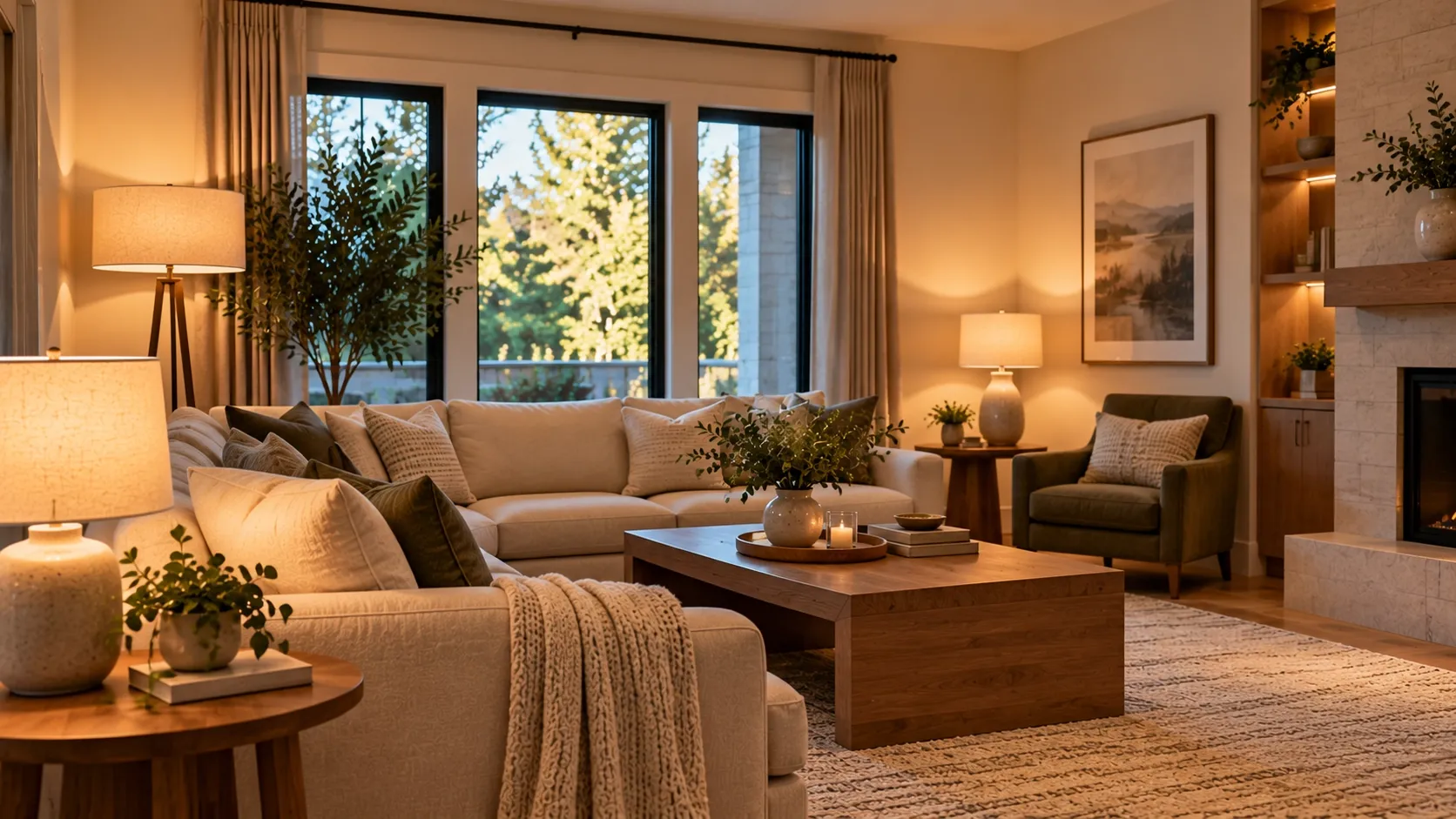
Use Floor and Table Lamps to Create Warmth
Floor and table lamps offer flexible lighting without requiring new ceiling fixtures. They can brighten dark corners, provide reading light, and make living rooms and bedrooms feel more comfortable.
Place a floor lamp beside a reading chair or a table lamp on a console or bedside table. Lamps with fabric shades often create a softer glow, while adjustable task lamps are useful for reading, hobbies, and desk work.
These are practical home lighting ideas for renters or homeowners who want to change a room without major construction. Try different positions before settling on a layout, and make sure cords do not create trip hazards.
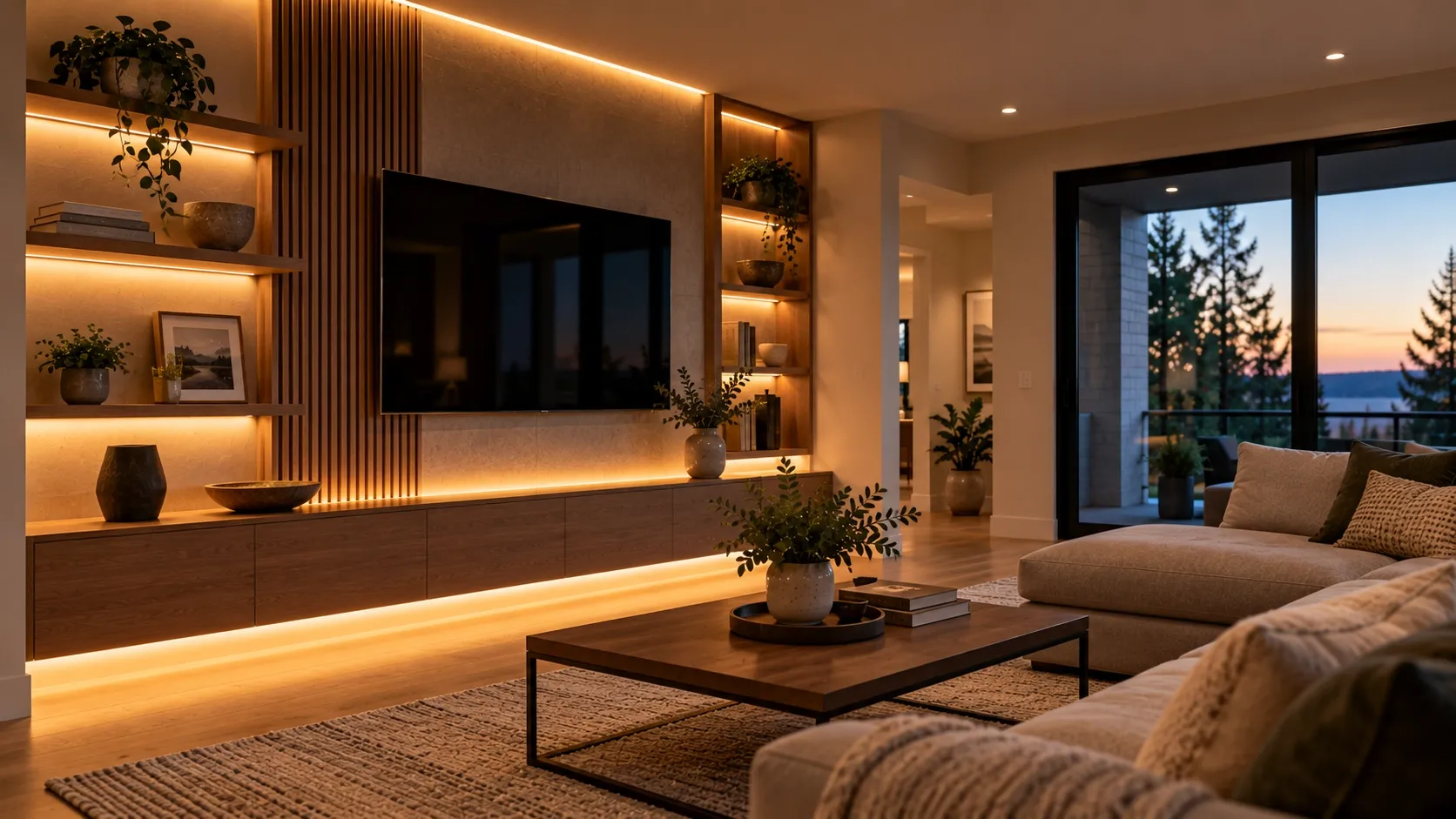
Incorporate LED Strip Lighting for Subtle Effects
LED strip lighting can add a soft glow beneath shelves, along selected ceiling details, inside cabinetry, or behind built-in features. It works well when the goal is to emphasize architectural lines rather than make the light source the main attraction.
For a clean appearance, conceal the strips within channels or behind a suitable edge. Diffusers can help reduce visible dots and create a more even line of light.
Choose strips designed for the location, especially in areas exposed to moisture. Plan access to drivers and connections so they can be maintained when needed. LED strip lighting can complement the main lighting system, but it should not replace appropriate task lighting where clear visibility is important.
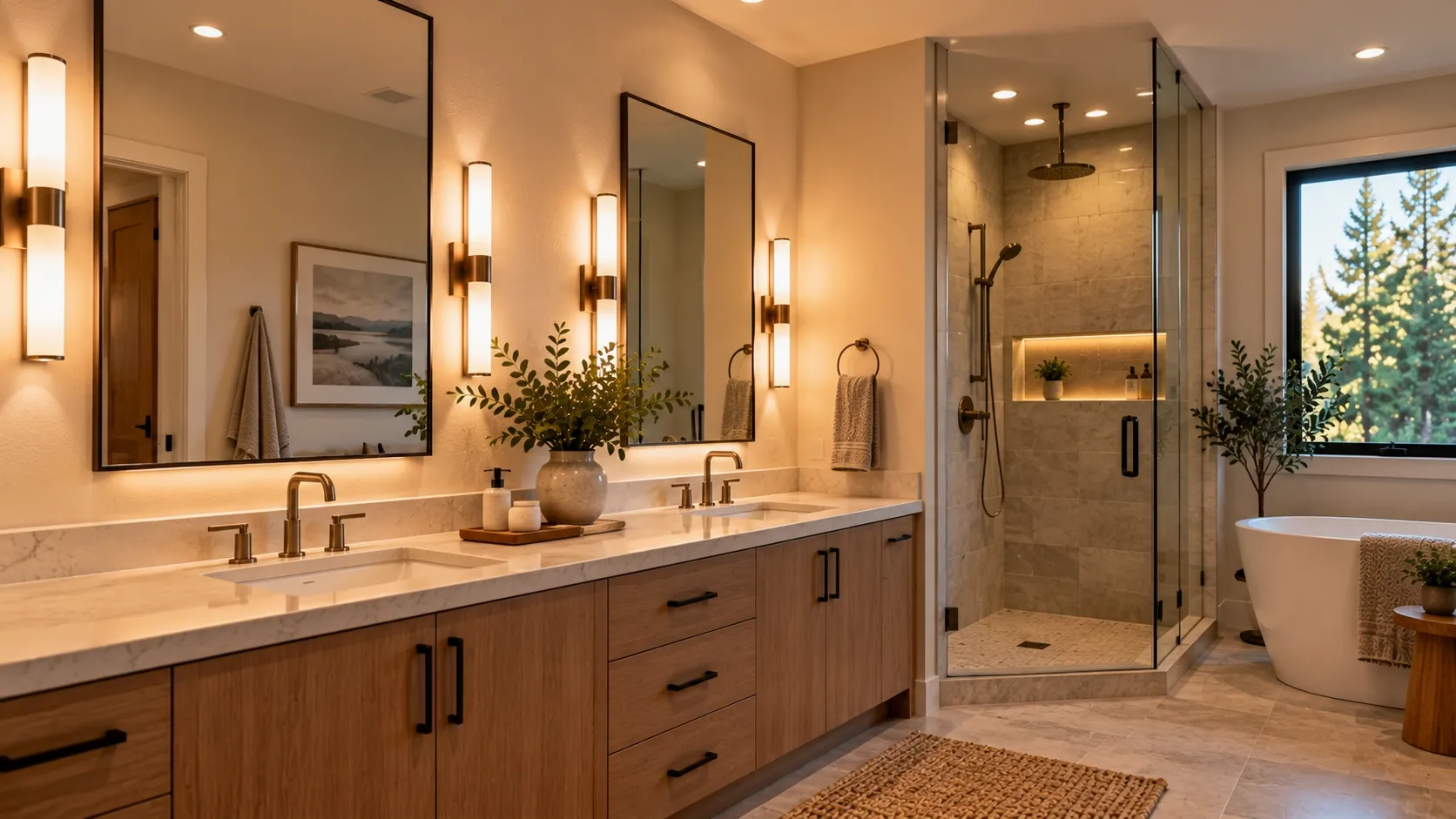
Brighten Bathrooms With Layered Vanity Lighting
Bathroom lighting should support grooming and everyday routines while making the space feel comfortable. A single ceiling fixture may leave strong shadows around the face, particularly when the mirror is used for shaving or applying makeup.
Consider combining general ceiling lighting with fixtures beside the mirror or a suitable vanity light above it. Side-mounted fixtures can provide more even facial illumination when positioned and selected correctly.
Choose products rated for the relevant bathroom location and moisture exposure. Also consider how the lighting works with tile, countertops, mirrors, and cabinet finishes.
If a bathroom remodel is planned, decide on mirror size, vanity dimensions, fixture placement, and electrical requirements together. Coordinating these details helps prevent fixtures from being blocked by cabinetry or positioned awkwardly.
Add Dimmers for Flexible Lighting Levels
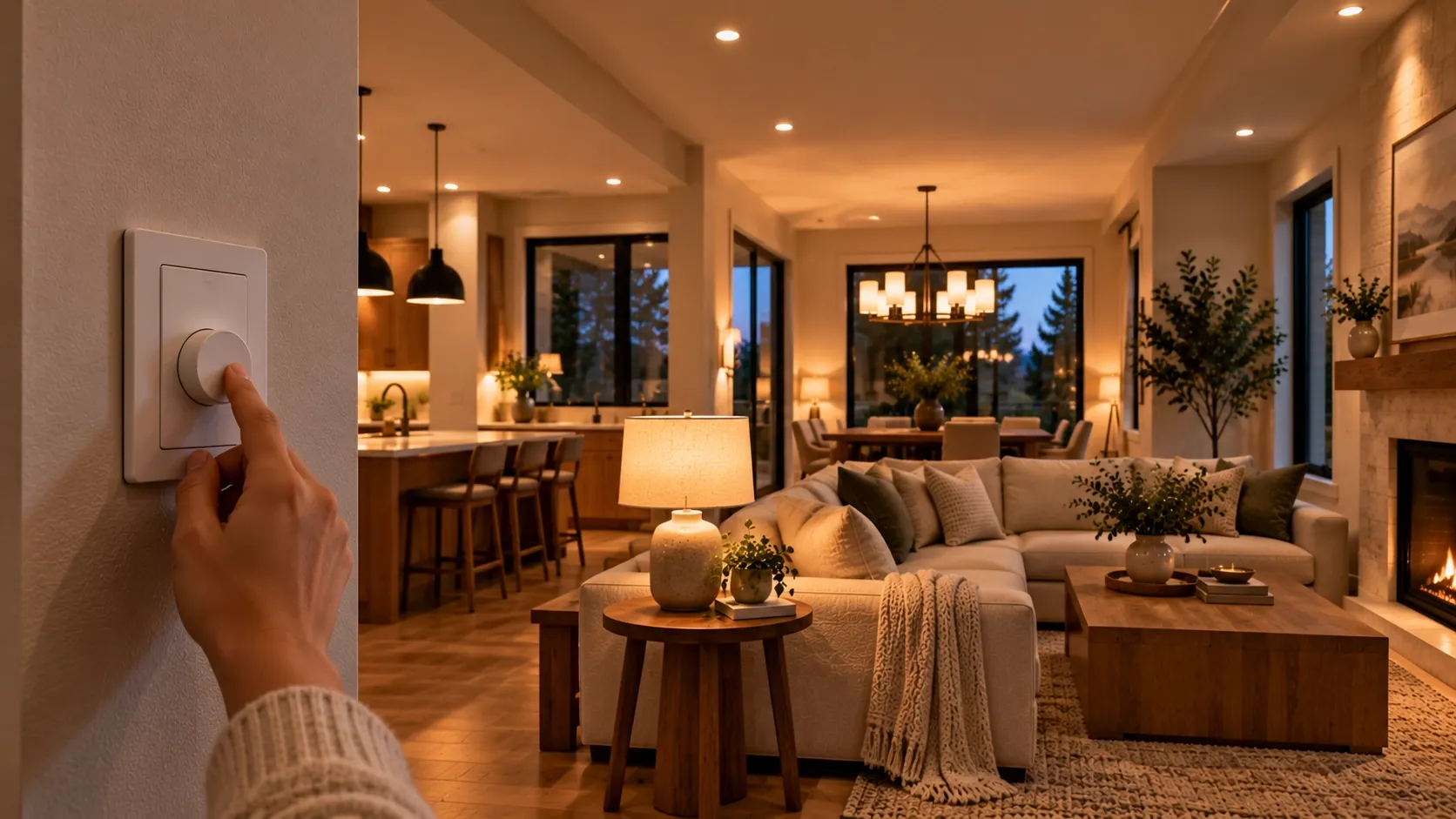
Dimmer switches let you adjust compatible lights to suit different activities and times of day. Brighter settings can support cleaning or food preparation, while lower settings can create a more relaxed atmosphere for dining or watching television.
Not every bulb or fixture works with every dimmer. Check compatibility to reduce the risk of flickering, buzzing, or limited dimming performance. Some LED systems also require specific controls.
Think about where adjustable lighting would be most useful. Dining rooms, living rooms, bedrooms, and certain kitchen zones often benefit from independent controls. Separating lighting into practical zones gives you more flexibility than placing every fixture on one switch.
Maximize Natural Light With Windows and Reflective Surfaces
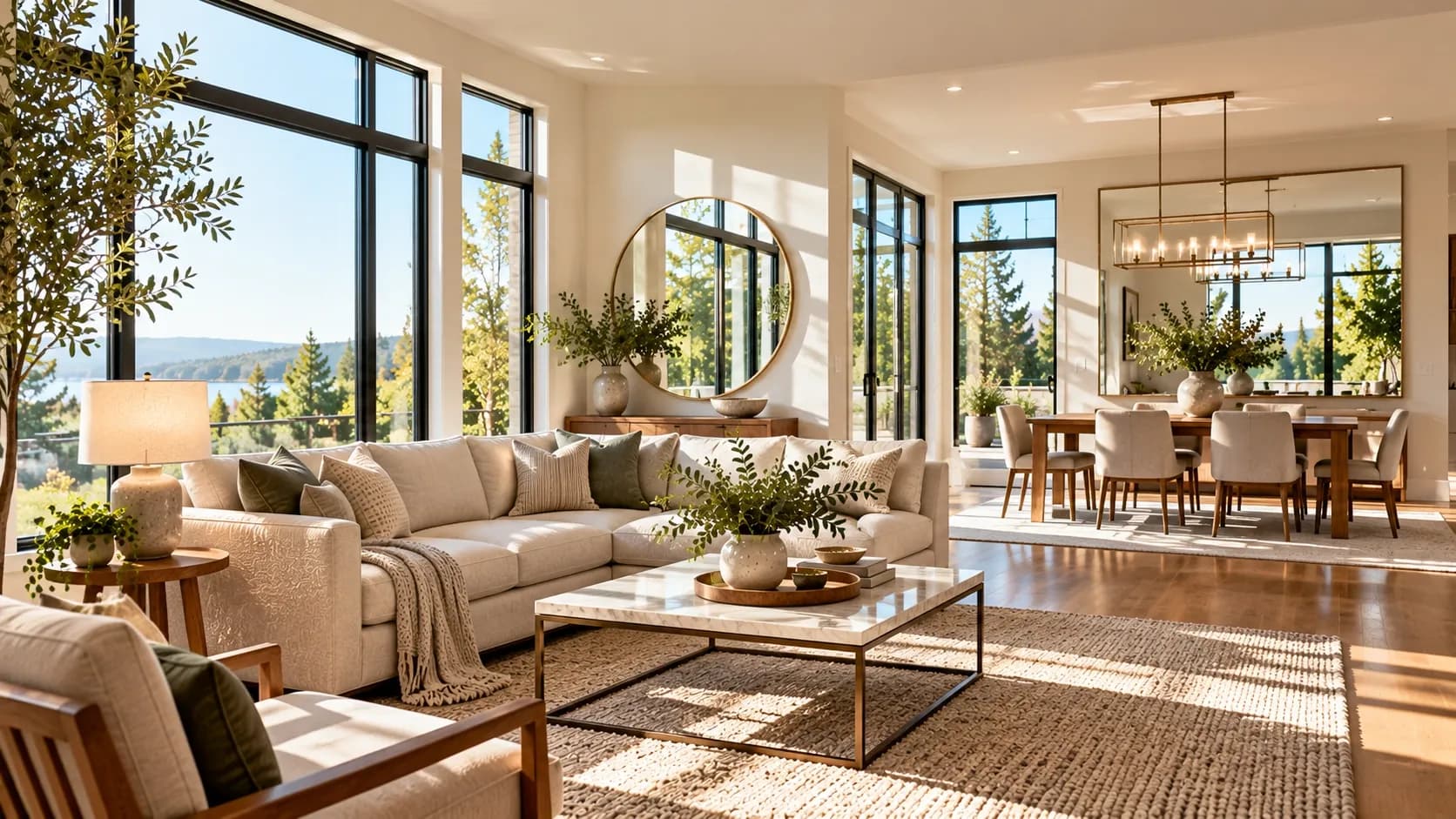
Natural light can make rooms feel more open and reduce the need for artificial lighting during daylight hours. Window placement, unobstructed glass, light-colored finishes, and reflective surfaces can all affect how daylight spreads through a home.
Use curtains or blinds that provide privacy while allowing daylight when appropriate. Mirrors can help distribute existing light, particularly when placed where they reflect a window or a bright area of the room.
For larger changes, consider whether a remodel could improve window access or the connection between indoor spaces. Structural changes require careful planning, and new windows or openings may involve permitting and building requirements.
Natural light also changes throughout the day and seasons, so plan artificial lighting to maintain comfortable visibility when daylight fades.
How Lighting Can Improve the Look and Feel of Your Home
Lighting influences how people use a room and how its finishes appear. A carefully planned combination of ambient, task, and accent lighting can make spaces more functional without relying on one bright overhead fixture.
- Ambient lighting provides general illumination for moving around and using the room.
- Task lighting focuses light on activities such as cooking, reading, or grooming.
- Accent lighting draws attention to features such as artwork, shelving, or textured walls.
These roles can overlap. A pendant above a kitchen island may provide both task lighting and a decorative focal point, while wall sconces can add ambient light and emphasize a feature wall.
For open-plan homes, coordinate lighting across the kitchen, dining, and living areas so each zone serves its purpose while the overall space feels connected. This is especially useful when planning broader open-floor plan changes.
Conclusion
The best lighting ideas balance function, comfort, and style. Pendant lights and chandeliers create focal points, recessed fixtures provide general illumination, and lamps, sconces, and LED strips address specific needs. Dimmers and natural light add flexibility.
Plan lighting alongside cabinetry, finishes, room layouts, and electrical work, especially during a larger renovation. GLC Kitchen & Bath Remodeling provides home remodeling services across the greater Puget Sound region, helping homeowners coordinate design and construction details.
Frequently Asked Questions
Recessed lighting, simple pendant fixtures, understated sconces, and concealed LED strips can create a modern look. Choose styles that complement your home's architecture and finishes.
Combine ambient and task lighting, add lamps to darker corners, and use light-colored finishes. Mirrors can help distribute existing daylight when positioned to reflect a window or bright surface.
Kitchens benefit from ceiling lights and under-cabinet task lighting. Bathrooms need general illumination and well-positioned vanity lights for grooming. Choose fixtures suitable for each location.
Plan lighting during the design stage, before construction and finish installation. This allows fixture locations, switches, wiring, cabinetry, and ceiling details to be coordinated before changes become more difficult.