

When comparing quartz vs quartzite, the biggest difference is that quartz is an engineered stone made from natural quartz minerals and resins, while quartzite is a natural stone formed from sandstone under intense heat and pressure. Both are durable countertop materials, but they differ in appearance, maintenance, heat resistance, and cost.
Choosing the right countertop is one of the most important decisions in a kitchen remodel. It affects not only your kitchen's appearance but also its durability, maintenance, and long-term value. This guide compares quartz and quartzite side by side, helping you understand their strengths so you can confidently choose the best option for your home.
Quartz vs Quartzite at a Glance
Feature | Quartz | Quartzite |
|---|---|---|
Material Type | Engineered stone | Natural stone |
Appearance | Consistent colors and patterns | Unique natural veining |
Maintenance | Low maintenance, no sealing required | Requires periodic sealing |
Heat Resistance | Good, but excessive heat can damage resin | Excellent heat resistance |
Scratch Resistance | Highly scratch resistant | Extremely scratch resistant |
Stain Resistance | Excellent due to non-porous surface | Good when properly sealed |
Color Options | Wide range of colors and finishes | Limited to naturally occurring colors |
Cost | Moderate to premium | Premium, depending on the slab |
Both materials perform well in modern kitchens. The right choice depends on your lifestyle, design preferences, maintenance expectations, and budget.
What Is Quartz?
Quartz countertops are engineered surfaces made by combining crushed natural quartz minerals with resins and pigments. This manufacturing process creates a strong, non-porous material that offers consistent color and pattern throughout each slab.
Because quartz is engineered rather than cut directly from a quarry, manufacturers can produce a wide variety of styles. Homeowners can choose from solid colors, subtle patterns, or designs that closely resemble natural marble or granite while maintaining a more uniform appearance.
Many homeowners planning a kitchen renovation choose quartz because it combines durability with minimal maintenance, making it well suited for busy households.
How Quartz Countertops Are Made
Natural quartz crystals are crushed into fine particles and mixed with polymer resins and color pigments. The mixture is then compressed under high pressure and cured to create dense, durable slabs.
After curing, the slabs are polished to achieve different finishes, ranging from high-gloss to matte. Since the manufacturing process is carefully controlled, each slab offers a consistent appearance, making it easier to match large kitchen islands, backsplashes, and countertops.
If you're gathering ideas for your renovation, these kitchen remodeling ideas can help you see how different countertop materials complement various kitchen styles.
Key Benefits of Quartz
Quartz countertops have become one of the most popular countertop materials for kitchens because they offer an excellent balance of beauty and practicality.
Some of the biggest quartz countertop benefits include:
- Non-porous surface that resists stains and moisture.
- No sealing required throughout normal use.
- Available in a wide range of colors and patterns.
- Consistent appearance across multiple slabs.
- Easy to clean with mild soap and water.
- Durable enough for everyday cooking and food preparation.
For homeowners who want an attractive countertop without ongoing maintenance, quartz is often an excellent long-term investment. It pairs well with both contemporary and traditional kitchen designs, making it a versatile choice for many remodeling projects.
What Is Quartzite?
Quartzite is a natural stone created when sandstone is exposed to intense heat and pressure deep within the earth. This natural process transforms the stone into a dense, durable material with distinctive veining and color variations.
Unlike engineered quartz, every quartzite slab is unique. No two pieces have the same pattern, making it an excellent choice for homeowners who want a one-of-a-kind kitchen. Its natural beauty and strength have made quartzite countertops increasingly popular in high-end kitchen remodels.
How Quartzite Forms Naturally
Quartzite begins as sandstone that is rich in quartz. Over millions of years, heat and pressure cause the quartz grains to fuse together, creating an extremely hard metamorphic rock.
After the stone is quarried, it is cut into slabs, polished, and prepared for countertop installation. Because quartzite is a natural material, each slab features its own blend of colors, movement, and veining, giving kitchens a distinctive and elegant appearance.
If you're planning a remodel, choosing the right countertop is just one part of the process. Learn more about our kitchen remodeling services to see how every design element works together.
Key Benefits of Quartzite
Quartzite offers the timeless appeal of natural stone while delivering exceptional durability for everyday use.
Some of the main quartzite countertop benefits include:
- Unique natural patterns and veining.
- Outstanding durability and strength.
- Excellent resistance to heat.
- High scratch resistance.
- Suitable for both modern and traditional kitchens.
- Can last for decades with proper care.
Because quartzite is porous, it should be sealed periodically to help protect the surface from moisture and stains. With routine maintenance, it remains one of the most durable countertop materials available.
Quartz vs Quartzite: Key Differences
Although quartz and quartzite may look similar at first glance, they perform differently in several important areas. Understanding these differences can help you choose the countertop material that best fits your lifestyle and renovation goals.
Appearance
One of the biggest differences between quartz and quartzite is appearance.
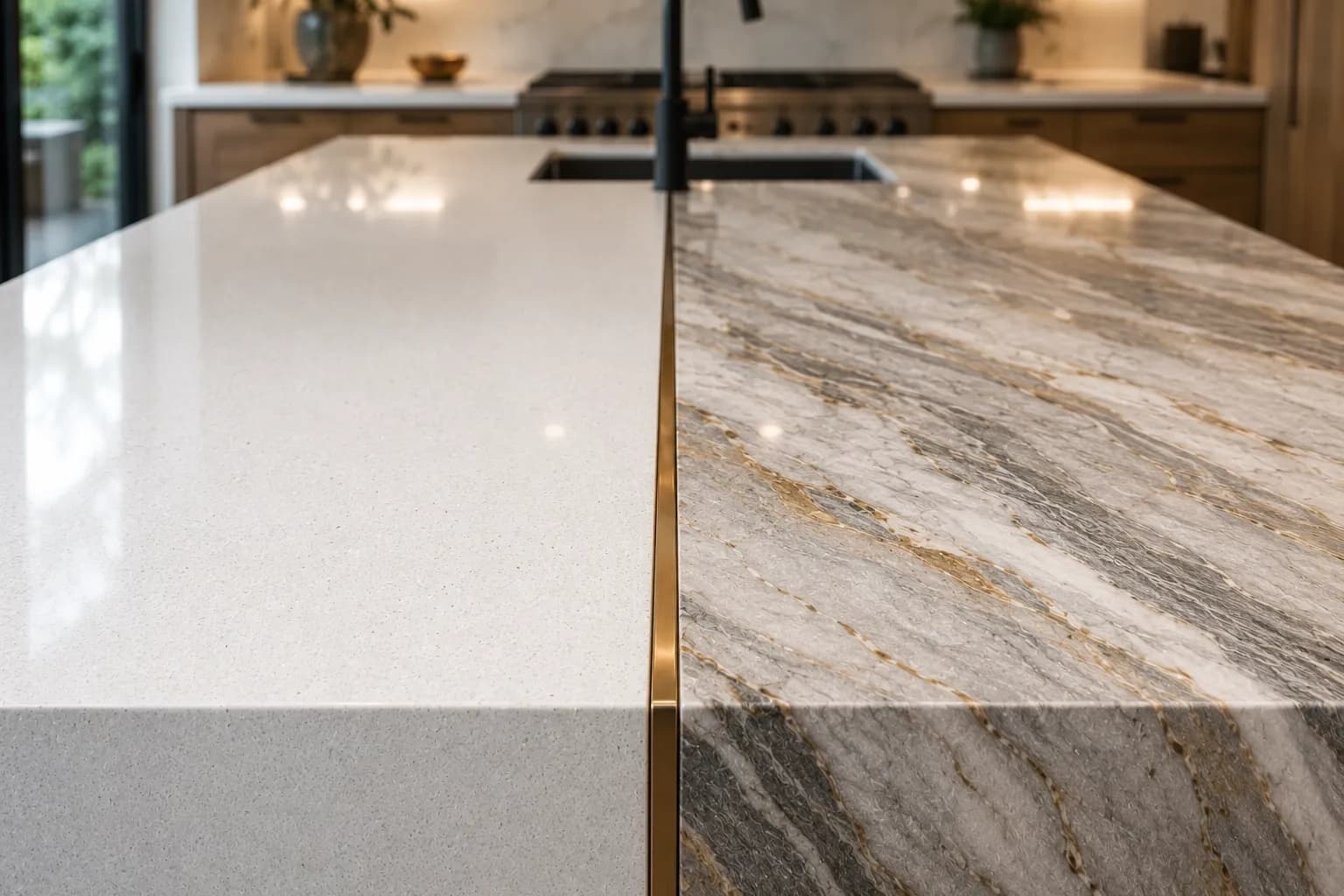
Quartz offers a consistent look because it is manufactured under controlled conditions. It is available in a wide range of colors and patterns, including designs that resemble marble and other natural stones.
Quartzite, on the other hand, showcases the beauty of nature. Each slab has unique veining, color variation, and movement that cannot be replicated. If you appreciate natural stone with individual character, quartzite is often the preferred choice.
Durability and Strength
Both materials are highly durable and perform well in busy kitchens.
Quartz is engineered to withstand everyday wear, making it resistant to chips and cracks under normal household use. Quartzite is even harder because it is a natural metamorphic stone, giving it exceptional strength and longevity when properly maintained.
For homeowners comparing quartzite vs quartz durability, both are excellent choices, but quartzite generally has a slight advantage in natural hardness.
Heat and Scratch Resistance
Quartzite handles high temperatures exceptionally well because it is a natural stone formed under extreme heat. Hot cookware is less likely to damage its surface, although using trivets is still recommended.
Quartz is also scratch resistant, but its resin content can be affected by excessive heat. Placing hot pots or pans directly on a quartz countertop may cause discoloration or damage over time.
Maintenance and Sealing
Maintenance is one of the most noticeable differences between quartz and quartzite.
Quartz has a non-porous surface that does not require sealing. Routine cleaning with mild soap and water is usually enough to keep it looking new.
Quartzite requires periodic sealing to help protect against stains and moisture. While this adds a maintenance step, many homeowners feel the natural beauty of the stone is well worth the extra care.
If you're also comparing renovation costs alongside countertop materials, our guide to Seattle kitchen remodel costs can help you plan your overall budget.
Cost and Long-Term Value
Quartz and quartzite are both premium countertop materials, but pricing varies depending on the brand, slab selection, edge profile, and installation complexity.
Quartz often offers more predictable pricing because it is manufactured in standard sizes and designs. Quartzite may cost more, particularly for rare slabs with dramatic natural veining or when additional fabrication is required.
From a long-term perspective, both materials provide lasting value. Choosing the right one depends less on price alone and more on your preferred style, maintenance expectations, and how you plan to use your kitchen every day.
Which Countertop Material Is Best for Your Kitchen?
There isn't a single answer that fits every homeowner. Both quartz and quartzite are excellent countertop materials, but the better choice depends on your priorities.
If you want a countertop that is easy to maintain, offers consistent colors, and never needs sealing, quartz is an excellent option. It works especially well for busy families and homeowners who prefer a low-maintenance surface.
If you value the beauty of natural stone and don't mind occasional sealing, quartzite offers a unique appearance and exceptional durability. Every slab is different, making it ideal for homeowners who want their kitchen to have a one-of-a-kind look.
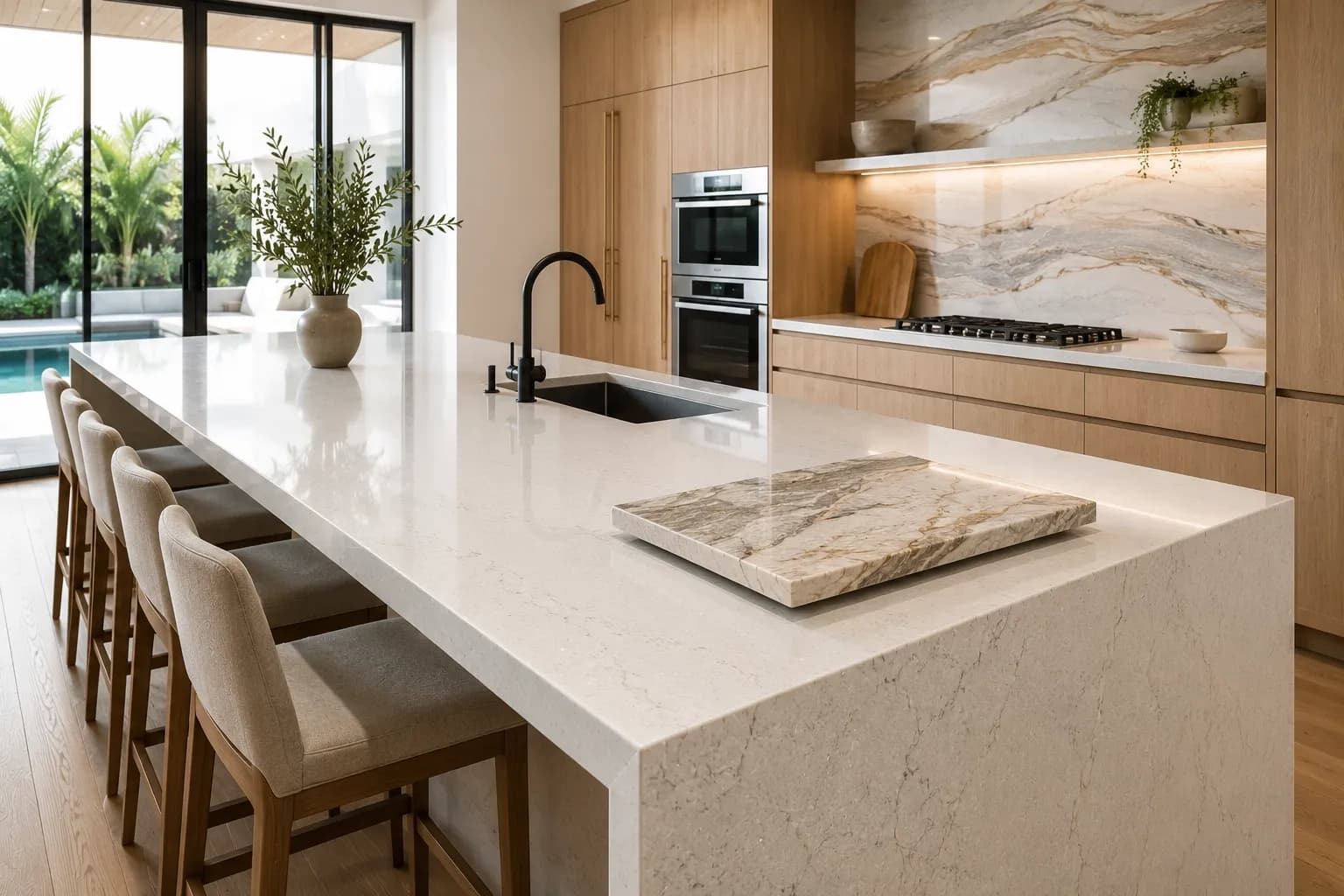
As part of a complete kitchen remodel, your countertop should complement your cabinetry, flooring, backsplash, and overall design style. Taking the time to compare materials helps ensure your investment continues to meet your needs for years to come.
How to Choose Between Quartz and Quartzite
When comparing quartz vs quartzite kitchen countertops, consider these key factors before making your final decision.
- Your budget: Quartz generally offers more consistent pricing, while quartzite costs can vary depending on the rarity of the slab and fabrication requirements.
- Your cooking habits: If you frequently cook with hot pots and pans, quartzite's superior heat resistance may be an advantage. Regardless of the material, using trivets is always recommended to protect the surface.
- Desired maintenance level: Quartz is virtually maintenance-free and doesn't require sealing. Quartzite needs periodic sealing to maintain its resistance to stains and moisture.
- Preferred design style: Choose quartz if you prefer clean, consistent patterns and a wide variety of colors. Choose quartzite if you appreciate the natural movement, veining, and individuality that only real stone can provide.
- Long-term durability expectations: Both materials are built to last, but selecting the right countertop also depends on how you use your kitchen every day and how much routine maintenance you're comfortable performing.
Choosing between these materials is easier when you work with experienced professionals who can explain the advantages of each option and recommend the best fit for your home, lifestyle, and budget.
Conclusion
When comparing quartz vs quartzite, both materials offer excellent performance, but they suit different needs. Quartz is an engineered surface that provides consistent designs, low maintenance, and excellent stain resistance. Quartzite is a natural stone known for its distinctive veining, exceptional strength, and impressive heat resistance.
The best countertop material depends on your budget, design preferences, cooking habits, and willingness to perform routine maintenance. By understanding the key differences between quartz and quartzite, you can choose a surface that complements your kitchen and provides lasting value.
If you're planning a kitchen renovation, selecting the right countertop is just one part of creating a functional and beautiful space. For personalized guidance on materials, layout, and design, feel free to contact our team to discuss your remodeling goals.
Frequently Asked Questions
Neither material is universally better. Quartz is ideal for homeowners who want a low-maintenance, non-porous countertop with consistent colors and patterns. Quartzite is better suited for those who prefer the beauty of natural stone and are comfortable with periodic sealing.
Yes. Because quartzite is a natural stone, it should be sealed periodically to help protect it from stains and moisture. The sealing schedule depends on the specific stone and how frequently the countertop is used.
Both materials are highly durable, but quartzite is generally harder and more heat resistant because it is a natural metamorphic stone. Quartz, however, offers excellent durability for everyday use while providing superior stain resistance and lower maintenance.
Both quartz and quartzite can enhance a home's appeal when professionally installed. Quartz is valued for its durability and ease of maintenance, while quartzite is often appreciated for its unique natural appearance. The best choice depends on your home's design, your lifestyle, and buyer preferences in your local market.