

Building an Accessory Dwelling Unit (ADU) in Seattle offers homeowners a lucrative way to generate rental income and increase property value. Recent legislative changes have removed major red tape, making backyard cottages and basement conversions highly accessible. Navigating the specific permitting processes and construction phases requires strict adherence to local regulations.
Navigating Seattle Zoning Code Requirements
The Seattle City Council recently overhauled local zoning laws to encourage housing density. The updated Seattle Municipal Code completely removes previous owner-occupancy requirements for properties with ADUs. Homeowners can now rent out both the primary residence and the accessory unit simultaneously.
Additionally, the city revised the Floor Area Ratio (FAR) limits, excluding ADU square footage from the maximum allowable lot coverage.
Choosing Between Attached and Detached Units
Property owners must decide between converting existing interior space or building a brand-new detached structure. Attached units often cost significantly less because they utilize existing walls and utility lines.
Conversely, Detached Accessory Dwelling Units (DADUs) yield higher rental rates due to the standalone privacy they offer tenants.
- Footprint Restrictions: Maximizing the allowable 1,000 square feet for detached backyard cottages.
- Foundation Upgrades: Addressing necessary seismic retrofitting when converting older Seattle basements.
- Privacy Considerations: Designing separate entrances to attract high-paying long-term tenants.
Securing Financing for Backyard Cottages
Securing adequate capital stands as the primary hurdle for most King County homeowners. Home Equity Lines of Credit (HELOCs) allow owners to tap into their existing property value to fund construction phases.
Alternatively, cash-out refinances replace the current mortgage with a larger loan, providing a lump sum for the build. Specialized renovation loans also factor in the future appraised value of the completed DADU to secure funding.
Breaking Down Construction Timelines and Costs
Seattle builders operate on timelines heavily dictated by the municipal permitting queue. Leveraging the city's pre-approved DADU gallery drastically reduces administrative waiting periods compared to designing a custom structure from scratch.
Project Approach | Average Permitting Time | Estimated Starting Cost |
Custom DADU Build | 4 to 6 Months | $300,000+ |
Pre-Approved Plan | 2 to 6 Weeks | $200,000+ |
Basement Conversion | 1 to 3 Months | $120,000+ |
Passing the Pre-Approved Design Phase
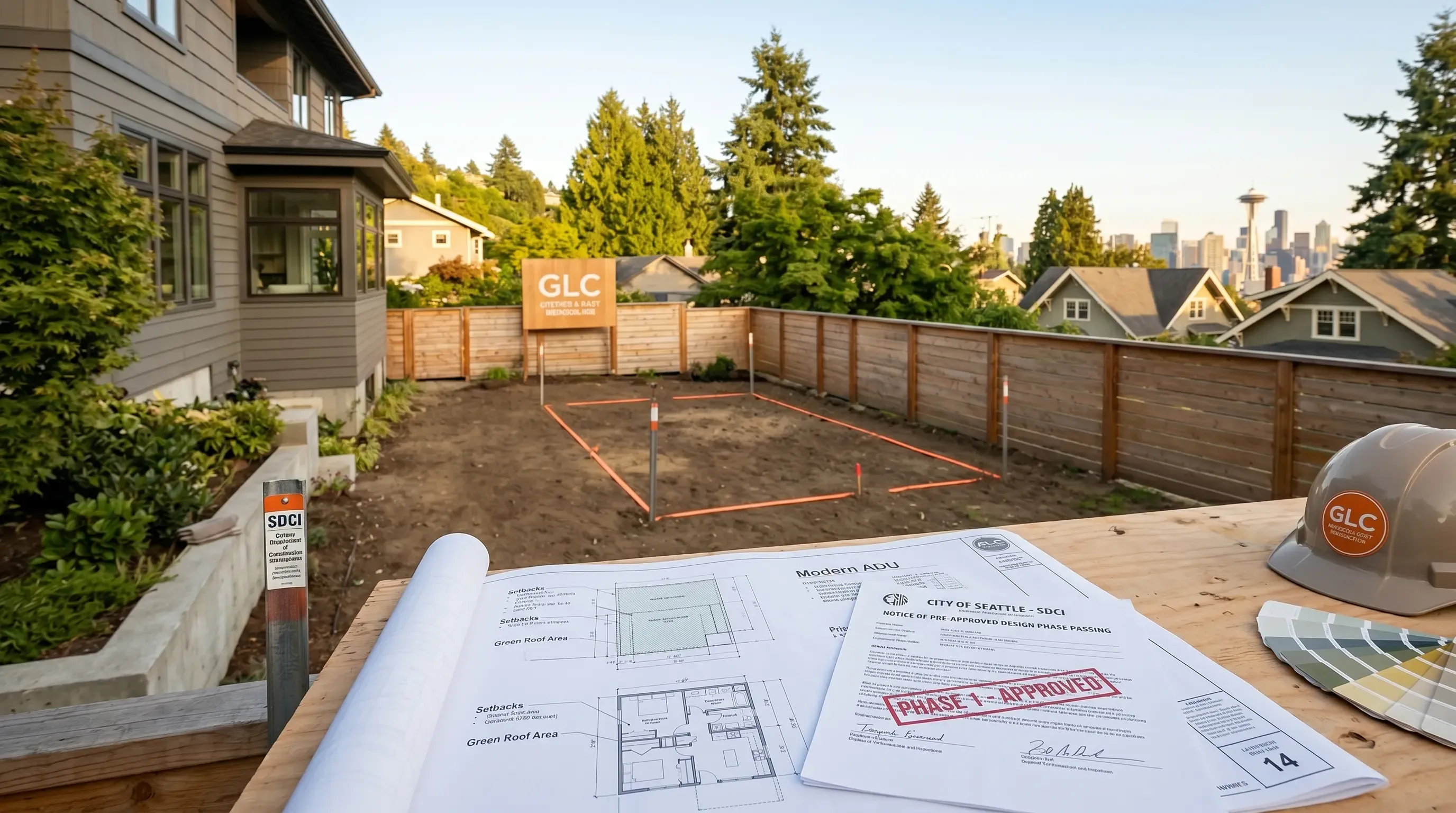
Seattle Department of Construction and Inspections (SDCI) regulates all accessory dwelling unit builds. Homeowners save significant time by selecting a pre-approved design from the city's official gallery. Moving these standardized plans through the SDCI approval queue requires a specific, systematic workflow.
Submitting Initial Site Plans
Architects submit detailed site plans to the SDCI to initiate the review process. These documents must explicitly show property lines, utility access points, and the proposed structure footprint.
Passing Structural Engineering Review
Even pre-approved plans require a localized structural engineering review. Engineers must verify that the chosen design safely accommodates the specific soil conditions and slope of your Seattle lot.
Finalizing City Master Permits
Once the structural review passes, the SDCI issues the master construction permits. Contractors cannot legally break ground or mobilize heavy machinery until they secure these final municipal documents.
Hiring Specialized Local Contractors
Executing a backyard cottage build requires partnering with experienced design-build firms. General contractors who lack specific experience with Seattle's unique topography and strict zoning laws frequently cause massive project delays. Property owners must vet builders rigorously to protect their investment and ensure compliance.
- Portfolio Verification: Reviewing previous DADU projects completed within the Seattle city limits.
- Permitting Expertise: Ensuring the firm handles all SDCI paperwork and inspector communications directly.
- Trenching Capabilities: Assessing the contractor's ability to navigate tight property lines with heavy machinery.
Managing Utility Connections Effectively
Tying a new dwelling unit into Seattle's aging municipal infrastructure presents significant engineering challenges. Plumbers must run new water and sewer lines from the street, directly through the primary property, back to the detached unit.
Electricians often need to upgrade the main house panel to handle the increased power load. Sloped lots complicate this process further, forcing contractors to deploy specialized trenching equipment to secure the deep utility runs properly.
Conclusion
Adding an accessory dwelling unit to your Seattle property builds substantial long-term wealth. A well-designed backyard cottage generates consistent rental income while dramatically increasing your overall property valuation. Professional execution eliminates costly delays and ensures your project meets all municipal codes.
To transform your property into a high-yielding real estate asset, request a free site evaluation from our design team today.
Frequently Asked Questions
No. The city completely removed off-street parking requirements for accessory dwelling units. This regulation change allows homeowners to maximize their buildable yard space without pouring concrete driveways.
Yes. Current Seattle zoning laws allow property owners to build up to two accessory units per lot. You can combine one attached basement conversion with one detached backyard cottage.
You must maintain a standard five-foot setback from side and rear property lines. However, if your property borders a public back alley, the city allows you to build right up to that specific alley line.
Yes. Building a new habitable structure adds significant value to your real estate portfolio. King County assessors will re-evaluate your property, and your annual property taxes will rise to reflect the newly added structure.