

If you're wondering how long a bathroom remodel takes in Seattle, the construction phase typically lasts 3 to 8 weeks. However, the entire process—including planning, design, material selection, permitting, and construction—usually takes 6 to 12 weeks or longer, depending on the project's size and complexity.
Knowing the timeline before you begin helps you plan your budget, prepare for temporary disruptions, and set realistic expectations. Whether you're updating a guest bathroom or creating a luxury primary suite, understanding each phase of the remodeling process can help your project run more smoothly.
What Is the Typical Timeline for a Bathroom Remodel in Seattle?
Every remodeling project is unique, so the timeline varies based on the scope of work. A simple cosmetic update may take only a few weeks, while a complete renovation with layout changes, custom materials, and permit approvals will require more time.
The table below outlines a typical bathroom remodel timeline for Seattle homeowners.
Project Stage | Typical Time |
|---|---|
Planning and Design | 1–3 weeks |
Material Selection and Ordering | 1–4 weeks |
Permitting (if required) | Varies by project |
Construction | 3–8 weeks |
Final Inspection and Punch List | A few days to 1 week |
Choosing a design-build contractor can help simplify the process because one team manages the design, permitting, and construction from start to finish.
Bathroom Remodel Timeline by Project Type
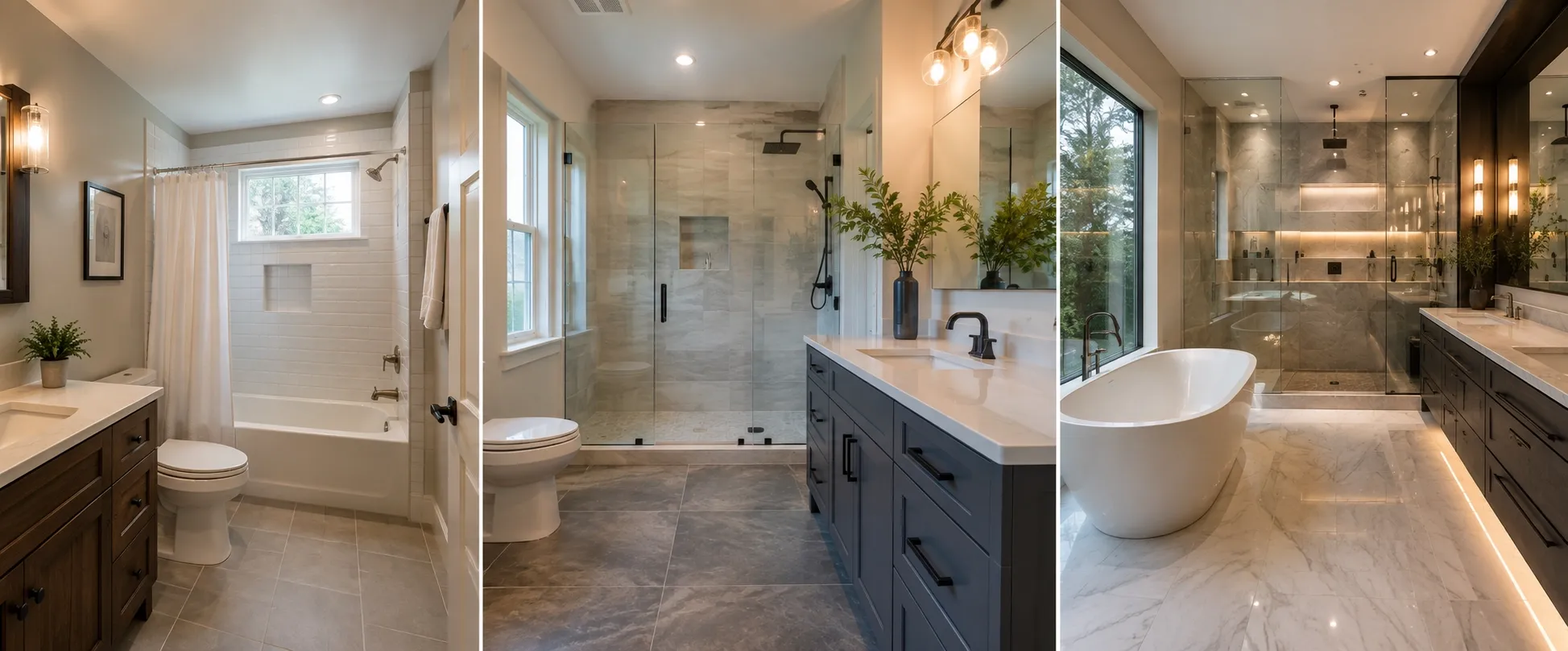
The size and complexity of your Bathroom renovation have the biggest impact on the overall timeline. Understanding the differences between project types can help you estimate how long your bathroom remodel may take and choose an approach that fits your goals and budget.
Cosmetic Bathroom Updates
A cosmetic remodel focuses on improving the bathroom's appearance without changing the existing layout or major plumbing and electrical systems.
Typical timeline: 1–3 weeks
Common upgrades include:
- Repainting walls
- Replacing faucets and fixtures
- Installing a new vanity
- Updating mirrors and lighting
- Replacing hardware
- Installing a new toilet
Since the existing structure remains unchanged, cosmetic renovations are typically completed quickly with minimal disruption.
Standard Bathroom Remodels
A standard bathroom remodel replaces most finishes and fixtures while keeping the plumbing layout largely the same.
Typical timeline: 4–6 weeks
These projects commonly include:
- New flooring
- Tile shower or bathtub surround
- Vanity replacement
- Updated plumbing fixtures
- Modern lighting
- Fresh paint
- Improved ventilation
This type of remodel is one of the most popular choices for Seattle homeowners because it significantly improves both appearance and functionality without requiring major structural changes.
Luxury or Custom Bathroom Renovations
Luxury renovations require additional planning and construction because they often involve custom designs, structural modifications, and premium materials.
Typical timeline: 6–10 weeks or longer
These projects may include:
- Expanding the bathroom
- Relocating plumbing fixtures
- Building a walk-in shower
- Installing a freestanding bathtub
- Heated flooring
- Custom cabinetry
- Premium tile or natural stone
- Smart lighting and luxury features
If you're deciding between a Walk-in shower and a bathtub for your remodel, compare the both options before making a decision.
The Key Phases of a Bathroom Remodel
Every bathroom renovation follows a series of well-planned stages. Completing each phase in the right order helps prevent delays, reduces unexpected costs, and keeps the project moving toward completion.
Planning and Design
Every successful remodel begins with careful planning. During this stage, you'll define your goals, establish a realistic budget, choose a layout, and select design features that fit your needs.
Working through these decisions before construction starts reduces the likelihood of delays caused by design changes later in the project.
Material Selection and Ordering
After the design is finalized, it's time to order materials. Cabinets, tile, plumbing fixtures, countertops, and shower glass often have different lead times, especially if you choose custom products.
Ordering materials early helps ensure everything arrives before construction begins, reducing the risk of unnecessary delays during the bathroom remodeling process.
Permitting and Approvals
Not every remodel requires a permit, but projects involving plumbing, electrical work, or structural changes often do. Permit requirements depend on the scope of the renovation and local building regulations.
An experienced contractor will handle the permitting process and coordinate inspections, allowing construction to begin once the necessary approvals are in place.
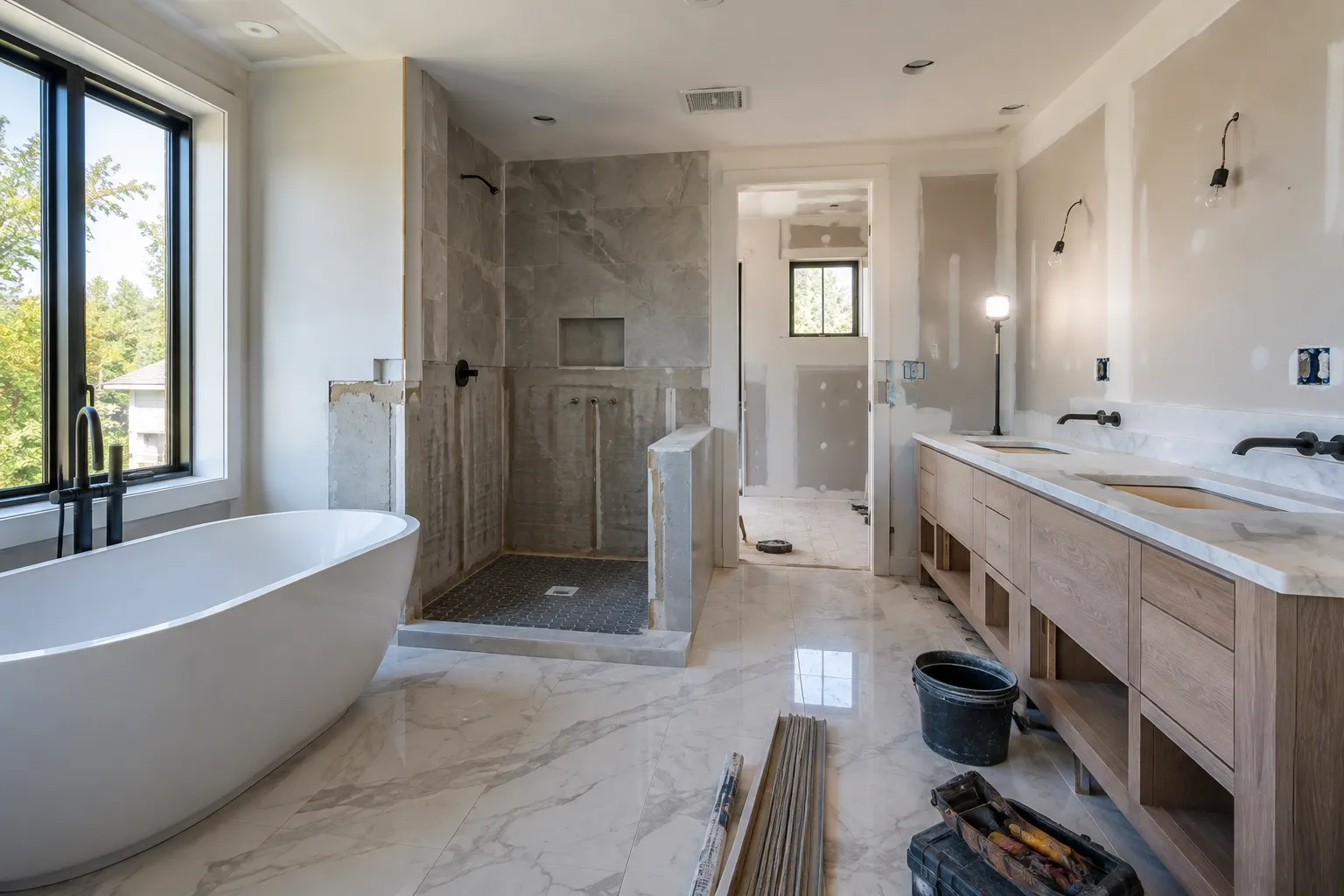
Demolition and Preparation
With permits approved and materials ready, demolition begins. Existing flooring, cabinets, fixtures, and wall finishes are removed, and the space is prepared for the new installation.
During this phase, contractors may uncover hidden issues such as water damage or outdated plumbing. Addressing these problems early helps prevent larger issues later in the renovation.
Plumbing and Electrical Work
After demolition, licensed professionals complete any required plumbing and electrical updates before walls and flooring are finished.
This stage may include:
- Relocating water supply and drain lines
- Updating electrical wiring
- Installing new outlets and switches
- Adding exhaust fans
- Preparing lighting locations
- Upgrading plumbing fixtures
Once these systems are complete and inspected, the project is ready for flooring, tile installation, and the finishing stages of the remodel.
Flooring, Walls, and Tile Installation
Once the plumbing and electrical work is complete, the bathroom begins to take shape. This phase focuses on installing the surfaces that define both the appearance and durability of the space.
Depending on the design, this stage may include:
- Installing floor tile or other flooring materials
- Waterproofing shower and wet areas
- Tiling shower walls and backsplashes
- Repairing and painting drywall
- Adding trim and finishing details
Because tile installation requires precision and drying time, it is often one of the longest phases of the bathroom remodeling timeline.
Fixture Installation and Finishing Touches
After the walls and flooring are complete, contractors install the fixtures and finishes that make the bathroom fully functional.
This stage typically includes:
- Installing the vanity and countertop
- Mounting sinks and faucets
- Installing the toilet
- Setting the bathtub or shower fixtures
- Hanging mirrors
- Installing lighting and accessories
- Connecting plumbing fixtures
- Completing paint touch-ups
At this point, the bathroom closely resembles the finished design, with only final inspections and minor adjustments remaining.
Final Inspection and Project Completion
The last phase ensures that every part of the remodel meets quality standards and local building requirements.
During this stage, contractors:
- Complete a final walkthrough
- Test plumbing and electrical systems
- Verify that fixtures operate correctly
- Address any remaining punch-list items
- Schedule final inspections if required
Once everything has been approved, your new bathroom is ready to use.
Factors That Can Affect Your Bathroom Remodel Timeline
Even with careful planning, certain factors can extend the overall timeline. Being aware of these possibilities helps you set realistic expectations before construction begins.
- Permit approvals: Projects involving structural, plumbing, or electrical changes may require permits, which can affect the start date.
- Material availability: Custom cabinets, specialty tile, and imported fixtures may have longer lead times than standard products.
- Unexpected repairs: Hidden water damage, mold, or outdated plumbing discovered during demolition can require additional work.
- Scope changes: Changing layouts, finishes, or materials after construction begins often adds both time and remodel cost.
- Inspection scheduling: Some projects require inspections before work can continue to the next phase.
- Product backorders: Delayed deliveries can temporarily pause installation until materials arrive.
How to Keep Your Bathroom Remodel on Schedule
While some delays are unavoidable, good planning can significantly reduce the chances of your project falling behind.
Finalize Design Decisions Early
Choose your layout, fixtures, finishes, and materials before construction starts. Making design changes during the project often leads to additional labor, material orders, and scheduling adjustments.
Order Materials Before Construction Begins
Confirm that essential materials are available before demolition starts. Having everything ready allows contractors to move from one phase to the next without waiting for deliveries.
Work With an Experienced Design-Build Contractor
A design-build contractor manages planning, permitting, scheduling, and construction under one contract. This approach improves communication and helps avoid delays caused by coordinating multiple companies.
GLC Kitchen and Bath Remodel follows a design-build process that keeps every stage of the project organized, from the initial consultation to final completion.
Minimize Mid-Project Changes
Once construction begins, try to avoid changing layouts, materials, or fixtures unless absolutely necessary. Even small changes can affect labor schedules and delay other parts of the renovation.
Signs It's Time to Start Planning Your Bathroom Remodel
Many homeowners wait until problems become severe before considering a renovation. Planning ahead allows you to update your bathroom before minor issues become costly repairs.
You may be ready for a remodel if you notice:
- Cracked or damaged tile
- Persistent leaks or water damage
- Outdated plumbing fixtures
- Poor lighting or ventilation
- Limited storage space
- An inefficient layout
- Mold or mildew that keeps returning
- Fixtures that no longer meet your family's needs
Conclusion
So, how long does a bathroom remodel take in Seattle? While construction typically takes 3 to 8 weeks, the full process often ranges from 6 to 12 weeks, depending on the project's complexity, material availability, permit requirements, and design choices.
Planning ahead, making decisions early, and working with an experienced remodeling team can help keep your project on schedule while reducing unexpected delays. If you're ready to transform your bathroom, book a free Consultation with us.
Frequently Asked Questions
A small bathroom remodel typically takes 1 to 3 weeks for cosmetic updates and 3 to 5 weeks for a full renovation, depending on the scope of work and material availability.
Permits are generally required when your remodel includes plumbing, electrical, or structural modifications. Cosmetic updates, such as painting or replacing fixtures, may not require permits.
In most cases, the bathroom being remodeled will not be usable during construction. If it's your home's only bathroom, discuss temporary solutions with your contractor before work begins.
The most common causes include permit delays, custom material lead times, hidden water damage, inspection scheduling, and changes to the project after construction has started.