

Expanding your property's footprint is one of the most effective ways to upgrade your lifestyle and increase your real estate equity. However, determining the true home addition cost in Seattle requires looking far past generic price-per-square-foot calculators.
From navigating strict city zoning laws to accounting for the Pacific Northwest's unique topography, understanding exactly what drives local construction expenses is the only way to establish a realistic, rock-solid budget before breaking ground.
Factors Influencing Your Construction Budget
Square footage provides a baseline for your budget, but the final price tag of an expansion is heavily dictated by the specific conditions of your property and the architectural complexity of the build.
Site Preparation and Topography
Seattle is famous for its steep hills and uneven terrain. Expanding your home's footprint onto a sloped lot requires significant excavation, robust retaining walls, and specialized engineering to ensure structural stability, which substantially increases your initial site preparation costs.
Material Quality and Finishes
The materials you select for both the exterior facade and interior living spaces have a massive impact on the final bill. Upgrading from standard, builder-grade materials to luxury finishes, like custom hardwood cabinetry, imported natural stone countertops, and high-efficiency smart windows, will dramatically elevate the overall project cost.
Structural and Foundation Requirements
Adding weight to an older home often means the existing foundation cannot safely support the new structure. Pouring a brand-new concrete foundation, upgrading structural framing, or performing earthquake retrofitting adds a significant, non-negotiable expense to ensure your home meets modern safety standards.
Navigating Local Permits and City Regulations
Building within the city limits involves strict administrative oversight. The permitting phase requires capital and patience long before physical construction can legally begin.
- Zoning and Setback Reviews: Strict property line restrictions and neighborhood zoning laws dictate exactly where and how far out you can build on your lot, often requiring costly architectural revisions to ensure full compliance.
- SDCI Permit Fees: The Seattle Department of Construction and Inspections (SDCI) requires comprehensive plan reviews and multiple permits, which adds thousands of dollars in upfront administrative costs to your total budget.
- Geotechnical Surveys: Because of the difficult soil conditions and steep slopes common throughout the region, mandatory soil testing and specialized engineering reports are frequently required to secure building approval.
The Impact of Labor on Regional Pricing
Construction labor rates in the Pacific Northwest are significantly higher than the national average due to the high cost of living and the immense local demand for skilled tradespeople.
While hiring independent subcontractors might seem cheaper initially, working with a cohesive design-build firm provides a highly coordinated, efficient team that prevents expensive scheduling delays and costly miscommunications.
Breaking Down Addition Expenses by Project Scope
Different types of Home additions carry entirely different financial complexities. Adding a bathroom requires intensive plumbing work, while a simple room bump-out is primarily structural framing.
Addition Type | Cost Complexity | Primary Expense Drivers |
Main Floor Bump Out | Moderate | Foundation pouring and excavation |
Full Second Story Addition | Very High | Roof removal and structural framing |
Master Suite Extension | High | Plumbing routing and high-end fixtures |
Choosing Between Building Up Versus Building Out
Deciding on the physical direction of your expansion is one of the most critical structural and financial choices you will make. Homeowners must carefully weigh the architectural requirements of their specific lot against their ultimate budget.
Analyzing Second Story Additions
Building up preserves your valuable backyard space, which is highly coveted in dense Seattle neighborhoods. However, this method requires completely removing the existing roof, heavily reinforcing the main floor walls to hold the new vertical load, and often upgrading the original foundation. Because of these intensive structural requirements, adding a second story is typically one of the most expensive expansion methods available.
Evaluating Main Floor Expansions
Building out into your yard allows you to avoid tearing off the roof and disrupting your upper living spaces. This path, however, introduces its own set of high costs. You will need to break ground for a new foundation, navigate complex local setback regulations, and potentially deal with extensive soil grading to create a level, stable building surface on Seattle's notoriously uneven terrain.
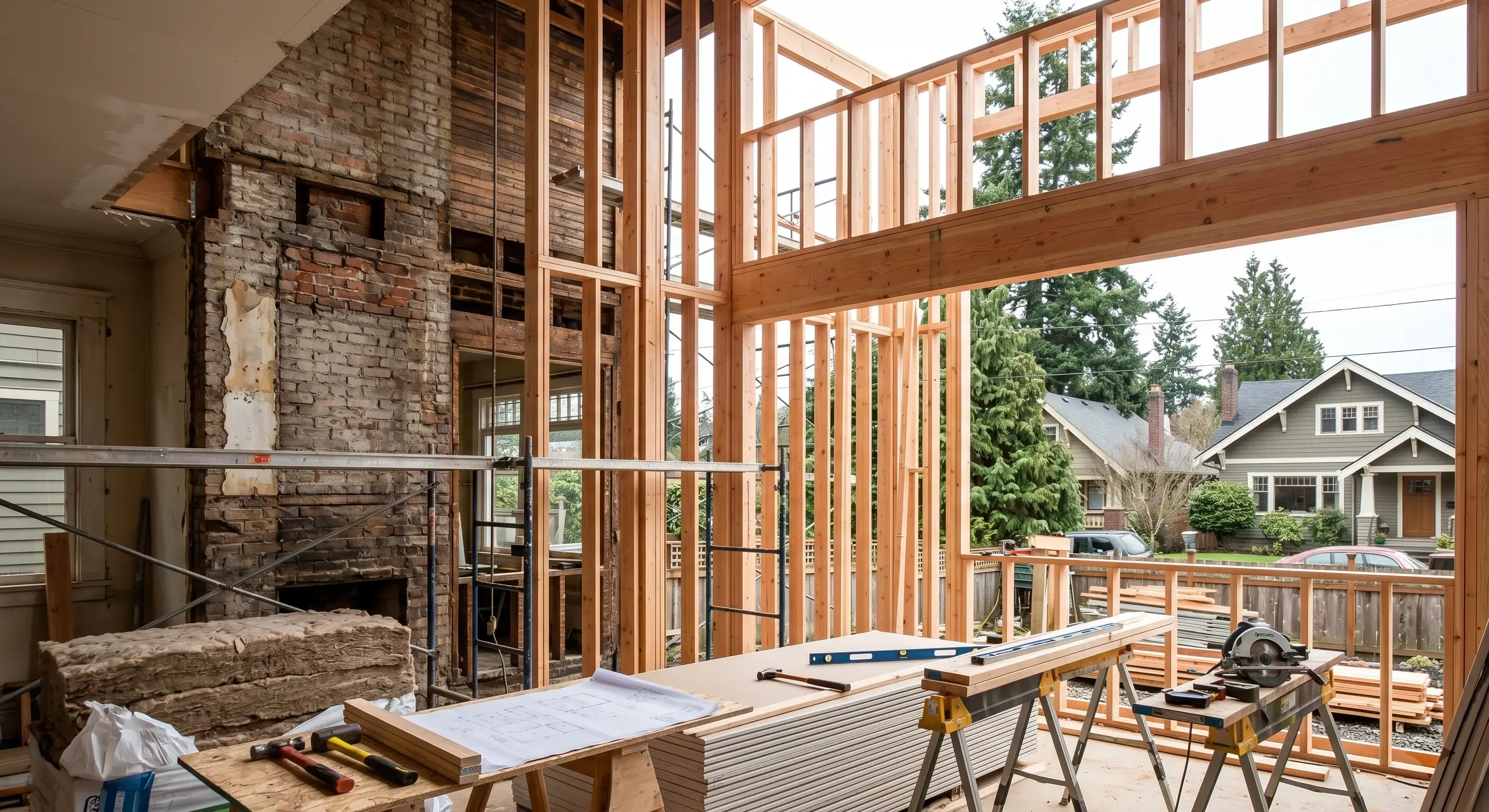
Hidden Expenses Homeowners Frequently Overlook
Even the most meticulously planned budgets can be derailed by unexpected technical requirements. Older homes frequently hide systemic issues that must be brought up to modern building codes during an expansion.
- Electrical Panel Upgrades: Adding square footage usually overloads older electrical systems, necessitating a costly upgrade to a modern panel to safely support the new lighting, appliances, and outlets.
- Plumbing Line Integrations: Tying a new bathroom or kitchen extension into decades-old, corroded plumbing lines often forces homeowners to completely repipe sections of the original house to prevent future leaks.
- HVAC System Expansions: An existing furnace or air conditioning unit may not have the capacity to heat and cool the new space, requiring the installation of supplemental mini-splits or a completely new central HVAC system.
Maximizing Return on Investment for Your Property
Strategic additions yield an incredible return on investment in the highly competitive local real estate market. Projects that directly address the specific demands of modern buyers command premium resale values.
Expanding the functional footprint of your home by adding a dedicated home office or a highly sought-after primary bedroom suite ensures that your initial construction investment continues to pay financial dividends well into the future.
Conclusion
Successfully executing a major property expansion requires far more than just architectural vision, it requires highly realistic budgeting and a deep understanding of local regulatory costs. Navigating Seattle's unique topography, securing the necessary permits, and managing complex labor markets are all vital steps in the journey.
To ensure your expansion is executed flawlessly and remains strictly within your financial goals, book a comprehensive project evaluation and cost consultation with our expert team today.
Frequently Asked Questions
While exact prices fluctuate based on material selections and site conditions, Seattle homeowners should generally expect costs to be significantly higher than national averages. For planning purposes, you can expect to pay between $600 and $800 per square foot for a home addition in Seattle or the Eastside.
In highly desirable Seattle neighborhoods where inventory is low and interest rates fluctuate, building an addition is very often more financially viable than paying closing costs, real estate agent fees, and the premium price tag of a larger, move-in-ready property.
Yes. For any major structural expansion, the city requires stamped, professionally drafted architectural and engineering plans to guarantee that the new structure is safe, seismically sound, and entirely up to code.
Yes. Adding livable square footage or new bathrooms will permanently increase the assessed value of your property, which will naturally result in a proportional increase in your annual property taxes.